
Online Sex Addiction Treatment: Virtual Care Available in All 50 States
Online Sex Addiction Treatment: Virtual Care Available in All 50 States
Start your recovery today from the privacy of home with the support of a licensed sex addiction therapy specialist. Treatment with Birches Health is covered by most major insurance providers.
Start your recovery today from the privacy of home with the support of a licensed sex addiction therapy specialist. Treatment with Birches Health is covered by most major insurance providers.
Confidential & Secure
Convenient Online Care
$0 with many insurances
Sex Addiction Specialists
Many clients pay $0-25 copay
Many clients pay $0-25 copay


Confidential
& Secure
Convenient Online Care
$0 with Many Plans
Sex Addiction Specialists
What Is Compulsive Sexual Behavior Disorder (CSBD)?
The World Health Organization classifies Compulsive Sexual Behavior Disorder (CSBD) as an impulse-control disorder in the ICD-11. It is described as a persistent failure to control intense, repetitive sexual impulses, urges or behaviors over an extended period (typically 6 months or more), causing marked distress or impairment.
Pattern of failure to control intense, repetitive sexual impulses or urges that results in repetitive sexual behavior.
Persists for an extended period, typically 6+ months.
Must cause marked distress or impairment in personal, family, social, educational, occupational or other important functioning.
High sexual interest or frequent sexual activity alone does not meet threshold without impaired control and functional impact.
Distress based only on moral disapproval of one’s sexual behavior is not sufficient for diagnosis.
Sex addiction can develop in a way similar to other behavioral addictions. Activities that trigger sexual excitement can activate the brain’s dopamine reward system. Over time, the brain begins to crave this stimulation more often. This addiction can also operate as a coping mechanism to distress. It’s not defined by the frequency of sex, but by its compulsive, harmful nature.
Birches Health treats sex addiction by often focusing on understanding triggers, managing urges and building healthier coping skills.
Is your sexual behavior impacting your life? Wondering if it’s crossed the line into addiction?
Take our Confidential Self-Assessment to see if you could benefit from specialized sex addiction therapy.
What Is Compulsive Sexual Behavior Disorder (CSBD)?
The World Health Organization classifies Compulsive Sexual Behavior Disorder (CSBD) as an impulse-control disorder in the ICD-11. It is described as a persistent failure to control intense, repetitive sexual impulses, urges or behaviors over an extended period (typically 6 months or more), causing marked distress or impairment.
Pattern of failure to control intense, repetitive sexual impulses or urges that results in repetitive sexual behavior.
Persists for an extended period, typically 6+ months.
Must cause marked distress or impairment in personal, family, social, educational, occupational or other important functioning.
High sexual interest or frequent sexual activity alone does not meet threshold without impaired control and functional impact.
Distress based only on moral disapproval of one’s sexual behavior is not sufficient for diagnosis.
Sex addiction can develop in a way similar to other behavioral addictions. Activities that trigger sexual excitement can activate the brain’s dopamine reward system. Over time, the brain begins to crave this stimulation more often. This addiction can also operate as a coping mechanism to distress. It’s not defined by the frequency of sex, but by its compulsive, harmful nature.
Birches Health treats sex addiction by often focusing on understanding triggers, managing urges and building healthier coping skills.
Is your sexual behavior impacting your life? Wondering if it’s crossed the line into addiction?
Take our Confidential Self-Assessment to see if you could benefit from specialized sex addiction therapy.
What Is Compulsive Sexual Behavior Disorder (CSBD)?
The World Health Organization classifies Compulsive Sexual Behavior Disorder (CSBD) as an impulse-control disorder in the ICD-11. It is described as a persistent failure to control intense, repetitive sexual impulses, urges or behaviors over an extended period (typically 6 months or more), causing marked distress or impairment.
Pattern of failure to control intense, repetitive sexual impulses or urges that results in repetitive sexual behavior.
Persists for an extended period, typically 6+ months.
Must cause marked distress or impairment in personal, family, social, educational, occupational or other important functioning.
High sexual interest or frequent sexual activity alone does not meet threshold without impaired control and functional impact.
Distress based only on moral disapproval of one’s sexual behavior is not sufficient for diagnosis.
Sex addiction can develop in a way similar to other behavioral addictions. Activities that trigger sexual excitement can activate the brain’s dopamine reward system. Over time, the brain begins to crave this stimulation more often. This addiction can also operate as a coping mechanism to distress. It’s not defined by the frequency of sex, but by its compulsive, harmful nature.
Birches Health treats sex addiction by often focusing on understanding triggers, managing urges and building healthier coping skills.
Is your sexual behavior impacting your life? Wondering if it’s crossed the line into addiction?
Take our Confidential Self-Assessment to see if you could benefit from specialized sex addiction therapy.
Key Characteristics of Sex Addiction
The ICD-11 describes several manifestations that support the diagnosis:
Sexual activity takes excessive time and leads to neglect of health, self-care, interests, or responsibilities.
There are repeated unsuccessful efforts to reduce or control the behavior.
The person continues despite adverse consequences.
The behavior persists even when little or no satisfaction is derived from it.
Is your sexual behavior impacting your life? Birches Health can help.
You Are Not Your Addiction
At Birches Health, we do not see a “sex addict.” We see a person navigating a complex behavioral health challenge. Our goal isn't to judge your past; it’s to provide the clinical tools to live a better future.
Many individuals use sexual behavior to cope with underlying pain, stress, past trauma, anxiety or loneliness. Our clinicians are trained to provide this form of specialized care. Therapy sessions can focus on understanding the root causes of behavior rather than assigning blame. This approach helps many clients speak openly about their experiences and begin building healthier patterns.

Key Characteristics of Sex Addiction
The ICD-11 describes several manifestations that support the diagnosis:
Sexual activity takes excessive time and leads to neglect of health, self-care, interests, or responsibilities.
There are repeated unsuccessful efforts to reduce or control the behavior.
The person continues despite adverse consequences.
The behavior persists even when little or no satisfaction is derived from it.
Is your sexual behavior impacting your life? Birches Health can help.
You Are Not Your Addiction
At Birches Health, we do not see a “sex addict.” We see a person navigating a complex behavioral health challenge. Our goal isn't to judge your past; it’s to provide the clinical tools to live a better future.
Many individuals use sexual behavior to cope with underlying pain, stress, past trauma, anxiety or loneliness. Our clinicians are trained to provide this form of specialized care. Therapy sessions can focus on understanding the root causes of behavior rather than assigning blame. This approach helps many clients speak openly about their experiences and begin building healthier patterns.
Key Characteristics of Sex Addiction
The ICD-11 describes several manifestations that support the diagnosis:
Sexual activity takes excessive time and leads to neglect of health, self-care, interests, or responsibilities.
There are repeated unsuccessful efforts to reduce or control the behavior.
The person continues despite adverse consequences.
The behavior persists even when little or no satisfaction is derived from it.
Is your sexual behavior impacting your life? Birches Health can help.
You Are Not Your Addiction
At Birches Health, we do not see a “sex addict.” We see a person navigating a complex behavioral health challenge. Our goal isn't to judge your past; it’s to provide the clinical tools to live a better future.
Many individuals use sexual behavior to cope with underlying pain, stress, past trauma, anxiety or loneliness. Our clinicians are trained to provide this form of specialized care. Therapy sessions can focus on understanding the root causes of behavior rather than assigning blame. This approach helps many clients speak openly about their experiences and begin building healthier patterns.
Core Components of Our Online Sex Addiction Therapy
Birches’ certified Master’s level clinicians understand the psychological and neurological case-by-case nuances and overall patterns behind compulsive sexual behaviors. This expertise allows them to design treatment plans tailored specifically to the emotional and behavioral aspects of your addiction.
Our virtual therapy provides accessibility, privacy and flexibility for people with demanding schedules or family responsibilities.
Sessions take place through secure, HIPAA-compliant video platforms. Many clients attend therapy more consistently through telehealth, which can support stronger outcomes in early recovery.
Core Components of Our Online Sex Addiction Therapy
Birches’ certified Master’s level clinicians understand the psychological and neurological case-by-case nuances and overall patterns behind compulsive sexual behaviors. This expertise allows them to design treatment plans tailored specifically to the emotional and behavioral aspects of your addiction.
Our virtual therapy provides accessibility, privacy and flexibility for people with demanding schedules or family responsibilities.
Sessions take place through secure, HIPAA-compliant video platforms. Many clients attend therapy more consistently through telehealth, which can support stronger outcomes in early recovery.
The Birches Approach to Rehabilitative Care
Cognitive Behavioral Therapy (CBT)
CBT helps clients recognize patterns that trigger compulsive sexual behavior. Therapists guide clients in building healthier responses to these triggers.
Individual Counseling
One-on-one sessions help clients address emotional challenges or trauma that may contribute to addictive behavior.
Group Therapy Support
Some clients benefit from structured group sessions where they can share experiences and gain accountability.
Relapse Prevention Planning
Clients learn practical tools for managing urges and avoiding high-risk situations.
The Birches Approach to Rehabilitative Care
Cognitive Behavioral Therapy (CBT)
CBT helps clients recognize patterns that trigger compulsive sexual behavior. Therapists guide clients in building healthier responses to these triggers.
Individual Counseling
One-on-one sessions help clients address emotional challenges or trauma that may contribute to addictive behavior.
Group Therapy Support
Some clients benefit from structured group sessions where they can share experiences and gain accountability.
Relapse Prevention Planning
Clients learn practical tools for managing urges and avoiding high-risk situations.
How Our Virtual Sex Addiction Therapy Works
Step 1
Confidential Online Intake
Complete a 2-minute secure form so our team can understand your needs.
Step 2
Virtual Clinical Evaluation
In your first session, your therapist will develop a full understanding of you as a client and provide a tailored care plan.
Step 3
Start Your Recovery
In follow-up sessions, your therapist will work with you to implement your treatment plan with actionable recommendations and progress tracking.
How Our Virtual Sex Addiction Therapy Works
Step 1
Confidential Online Intake
Complete a 2-minute secure form so our team can understand your needs.
Step 2
Virtual Clinical Evaluation
In your first session, your therapist will develop a full understanding of you as a client and provide a tailored care plan.
Step 3
Start Your Recovery
In follow-up sessions, your therapist will work with you to implement your treatment plan with actionable recommendations and progress tracking.
Benefits of Online Recovery With Birches Health

Treatment is
fully virtual
&
confidential.
Privacy & Discretion
Attend therapy from the comfort of home without traveling to a therapist’s office or a rehab facility. No travel. No logistical issues. No awkward waiting room encounters.
Personalized 1:1 Care and Tailored Treatment Plans
Our program is designed to help clients regain control and improve overall wellbeing.
Real Results
96% of clients report an improved quality of life
Covered by insurance
Birches Health is in-network with most major insurance providers. Coverage varies by plan, but our team verifies benefits upfront so there are no surprise bills.
Treatment is
fully virtual
&
confidential.

Benefits of Online Recovery With Birches Health
Treatment is
fully virtual
&
confidential.
Privacy & Discretion
Attend therapy from the comfort of home without traveling to a therapist’s office or a rehab facility. No travel. No logistical issues. No awkward waiting room encounters.
Personalized 1:1 Care and Tailored Treatment Plans
Our program is designed to help clients regain control and improve overall wellbeing.
Real Results
96% of clients report an improved quality of life
Covered by insurance
Birches Health is in-network with most major insurance providers. Coverage varies by plan, but our team verifies benefits upfront so there are no surprise bills.
Treatment is
fully virtual
&
confidential.

Benefits of Online Recovery With Birches Health
Treatment is
fully virtual
&
confidential.
Privacy & Discretion
Attend therapy from the comfort of home without traveling to a therapist’s office or a rehab facility. No travel. No logistical issues. No awkward waiting room encounters.
Personalized 1:1 Care and Tailored Treatment Plans
Our program is designed to help clients regain control and improve overall wellbeing.
Real Results
96% of clients report an improved quality of life
Covered by insurance
Birches Health is in-network with most major insurance providers. Coverage varies by plan, but our team verifies benefits upfront so there are no surprise bills.
Treatment is
fully virtual
&
confidential.
Stories of Transformation
Recovery looks different for everyone, but with professional support, long-term change is possible.
“
The process to be onboarded was very easy and the help I have been receiving the last 6 months has been life changing.
Ryan J.
“
My counselor was very informative. She asked questions and helped me understand addiction. She let me know I am not alone and gave me tools to help me succeed.
Carla R.
See what else clients have to say about the leading recovery programs in the country.
Stories of Transformation
Recovery looks different for everyone, but with professional support, long-term change is possible.
“
The process to be onboarded was very easy and the help I have been receiving the last 6 months has been life changing.
Ryan J.
“
My counselor was very informative. She asked questions and helped me understand addiction. She let me know I am not alone and gave me tools to help me succeed.
Carla R.
See what else clients have to say about the leading recovery programs in the country.
Stories of Transformation
Recovery looks different for everyone, but with professional support, long-term change is possible.
“
The process to be onboarded was very easy and the help I have been receiving the last 6 months has been life changing.
Ryan J.
“
My counselor was very informative. She asked questions and helped me understand addiction. She let me know I am not alone and gave me tools to help me succeed.
Carla R.
See what else clients have to say about the leading recovery programs in the country.
Start Your
Recovery
Today
Compassionate, convenient and confidential treatment is available when you are ready to begin.
Start Your
Recovery
Today
Compassionate, convenient and confidential treatment is available when you are ready to begin.
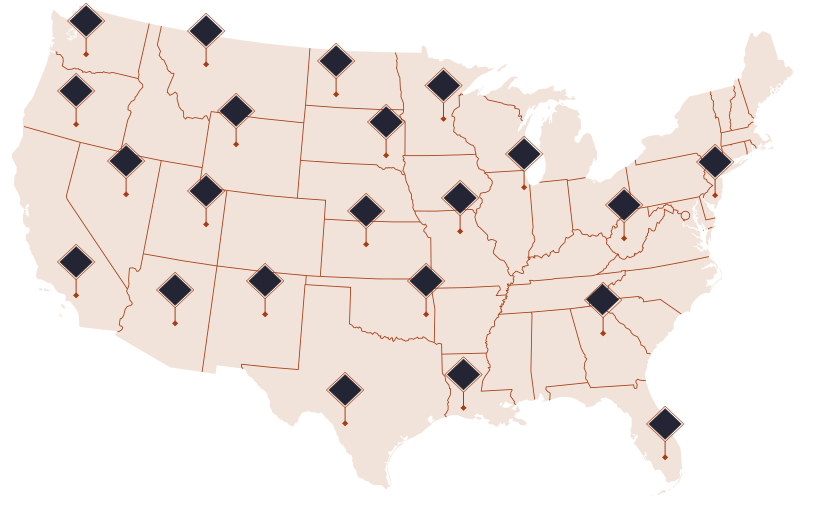
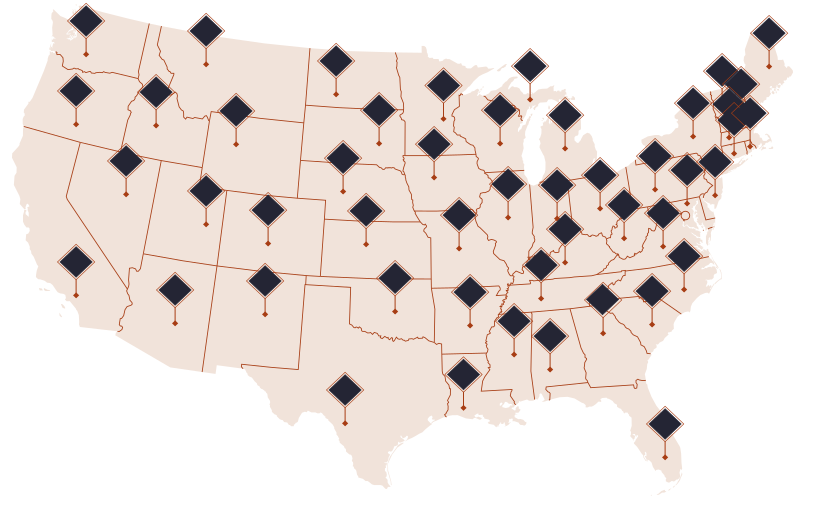
Sex Addiction treatment in all
Sex Addiction treatment in all
50 states
Birches Health partners with all major insurance companies with a core goal of increasing access to care by breaking down the traditional barriers such as prohibitive costs. Thanks to our in-network status with many top insurance plans across the country, most patients can receive specialist treatment with low (or even $0) out-of-pocket costs.
There are additional payment options available if your plan does not cover this type of specialized treatment.
Birches Health partners with all major insurance companies with a core goal of increasing access to care by breaking down the traditional barriers such as prohibitive costs. Thanks to our in-network status with many top insurance plans across the country, most patients can receive specialist treatment with low (or even $0) out-of-pocket costs.
There are additional payment options available if your plan does not cover this type of specialized treatment.



Explore treatment in your state
Alabama
Alaska
Arizona
Arkansas
California
Colorado
Connecticut
Delaware
Florida
Georgia
Hawaii
Idaho
Illinois
Indiana
Iowa
Kansas
Kentucky
Louisiana
Maine
Maryland
Massachusetts
Michigan
Minnesota
Mississippi
Missouri
Montana
Nebraska
Nevada
New Hampshire
New Jersey
New Mexico
New York
North Carolina
North Dakota
Ohio
Oklahoma
Oregon
Pennsylvania
Rhode Island
South Carolina
South Dakota
Tennessee
Texas
Utah
Vermont
Virginia
Washington
Washington, D.C.
West Virginia
Wisconsin
Frequently Asked Questions
What are the signs and symptoms of sex addiction?
Persistent pattern (6+ months) of failure to control intense, repetitive sexual impulses or urges that results in repetitive sexual behavior. It causes notable distress or impairment in personal, family, social, educational, occupational or other important parts of daily life.
Is sex addiction a mental illness?
Compulsive Sexual Behavior Disorder is classified by the World Health Organization as an impulse-control disorder in the ICD-11.
Is online therapy as effective as in-person treatment?
Virtual therapy improves attendance and consistency. This can support better outcomes during recovery. Multiple studies have shown no significant differences in symptom outcomes between virtual therapy and face-to-face sessions for addiction and related mental health treatment (Sources: Addiction Treatment and Telehealth: Review of Efficacy and Provider Insights During the COVID-19 Pandemic; Telehealth Versus Face-to-face Psychotherapy for Less Common Mental Health Conditions)
Is sex addiction therapy covered by insurance?
Coverage varies by provider and plan. Birches Health is in-network with most major insurance carriers but will verify benefits before treatment begins to provide a transparent cost estimate and avoid any surprises.
What if I do not have insurance?
Birches Health also offers self-pay options for sex addiction treatment if that is of interest.
Still have a question?
Frequently Asked Questions
What are the signs and symptoms of sex addiction?
Persistent pattern (6+ months) of failure to control intense, repetitive sexual impulses or urges that results in repetitive sexual behavior. It causes notable distress or impairment in personal, family, social, educational, occupational or other important parts of daily life.
Is sex addiction a mental illness?
Compulsive Sexual Behavior Disorder is classified by the World Health Organization as an impulse-control disorder in the ICD-11.
Is online therapy as effective as in-person treatment?
Virtual therapy improves attendance and consistency. This can support better outcomes during recovery. Multiple studies have shown no significant differences in symptom outcomes between virtual therapy and face-to-face sessions for addiction and related mental health treatment (Sources: Addiction Treatment and Telehealth: Review of Efficacy and Provider Insights During the COVID-19 Pandemic; Telehealth Versus Face-to-face Psychotherapy for Less Common Mental Health Conditions)
Is sex addiction therapy covered by insurance?
Coverage varies by provider and plan. Birches Health is in-network with most major insurance carriers but will verify benefits before treatment begins to provide a transparent cost estimate and avoid any surprises.
What if I do not have insurance?
Birches Health also offers self-pay options for sex addiction treatment if that is of interest.
Still have a question?
Frequently Asked Questions
What are the signs and symptoms of sex addiction?
Persistent pattern (6+ months) of failure to control intense, repetitive sexual impulses or urges that results in repetitive sexual behavior. It causes notable distress or impairment in personal, family, social, educational, occupational or other important parts of daily life.
Is sex addiction a mental illness?
Compulsive Sexual Behavior Disorder is classified by the World Health Organization as an impulse-control disorder in the ICD-11.
Is online therapy as effective as in-person treatment?
Virtual therapy improves attendance and consistency. This can support better outcomes during recovery. Multiple studies have shown no significant differences in symptom outcomes between virtual therapy and face-to-face sessions for addiction and related mental health treatment (Sources: Addiction Treatment and Telehealth: Review of Efficacy and Provider Insights During the COVID-19 Pandemic; Telehealth Versus Face-to-face Psychotherapy for Less Common Mental Health Conditions)
Is sex addiction therapy covered by insurance?
Coverage varies by provider and plan. Birches Health is in-network with most major insurance carriers but will verify benefits before treatment begins to provide a transparent cost estimate and avoid any surprises.
What if I do not have insurance?
Birches Health also offers self-pay options for sex addiction treatment if that is of interest.
Still have a question?
Crisis & Safety
Need Immediate Help? If you or someone you know is in immediate danger, experiencing a medical emergency, having thoughts of suicide or self-harm, or experiencing a mental health or substance use crisis, call 911 for Emergency Services or call/text 988 for the Suicide & Crisis Lifeline.
Crisis & Safety
Need Immediate Help? If you or someone you know is in immediate danger, experiencing a medical emergency, having thoughts of suicide or self-harm, or experiencing a mental health or substance use crisis, call 911 for Emergency Services or call/text 988 for the Suicide & Crisis Lifeline.